Эрдсийг эрдэнэст
Ирээдүйг өндөр хөгжилд
Ирээдүйг өндөр хөгжилд
Mining The Resources
Minding the future
Minding the future
The Mongolian Mining Journal | December 2025
By A. Khaliun
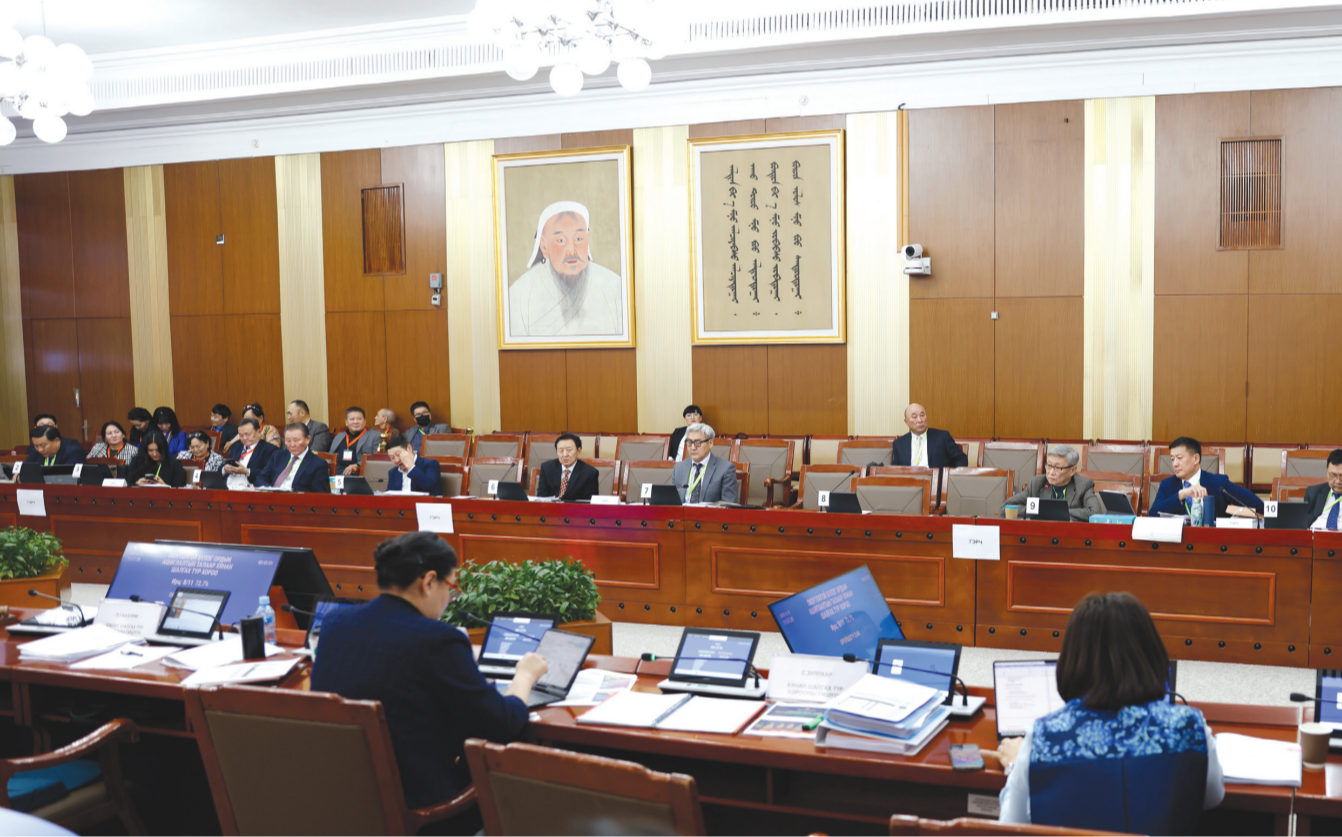
An open parliamentary hearing on the Oyu Tolgoi Investment Agreement was held on December 8, 10, and 12. The hearing was organized by the Interim Oversight Committee, whose official mandate is to supervise and review documents and activities related to safeguarding Mongolia’s national interests and increasing the benefits derived from the exploitation of the Oyu Tolgoi group of deposits.
The committee was chaired by Member of Parliament O. Batnairamdal, with MPs M. Badamsuren, B. Bat-Erdene, B. Bayarbaatar, E. Bolormaa, S. Zulpkhar, Sh. Byambasuren, P. Ganzorig, B. Jargalan, D. Purevdavaa, and U. Shijir served as members.
At the hearing, designed to analyze and review the evidence, approximately 300 individuals were summoned as witnesses. These included former Presidents, Speakers of Parliament, Prime Ministers, Members of Parliament, sector ministers, members of working groups involved in the establishment of the Oyu Tolgoi Investment Agreement, and executives of Oyu Tolgoi LLC. Of these, 207 attended, representing a turnout of over 70%, which Interim Oversight Committee Chairman O. Batnairamdal noted was higher than in previous hearings.
The Oyu Tolgoi project remains a crucial part of Mongolia’s economy—not only for present-day Mongolians but also for future generations. For this reason, the hearing was organized with the goals of improving the Investment Agreement and providing the public with more information about the project.
Over the 16 years since the Investment Agreement was signed, a total of $22 billion has been invested in the project. The Oyu Tolgoi project is expected to remain one of Mongolia’s most important economic initiatives for the next 20–30 years. Employing 18,000 people, it accounts for approximately 40% of Mongolia’s foreign direct investment, around 20% of total national debt, and 31% of the country’s foreign currency reserves, making it a mega-project of national significance.
However, Interim Oversight Committee Chairman O. Batnairamdal emphasized that several aspects of the Investment Agreement still need to be amended and improved.
As the Mongolian government owns 34% of the Oyu Tolgoi deposit, it is also responsible for 34% of the total project investment. The situation can be summarized as follows: the government asked, “We don’t have the funds—will you provide them?” and the investors replied, “We don’t have them either; we will finance it through a loan.” In short, this was the agreement reached between the two parties.
However, it was noted that the loan interest was 3–6% higher than that of typical mining project loans, reducing the profitability of the agreement for Mongolia. Participants at the hearing discussed possible ways to amend and improve this issue.
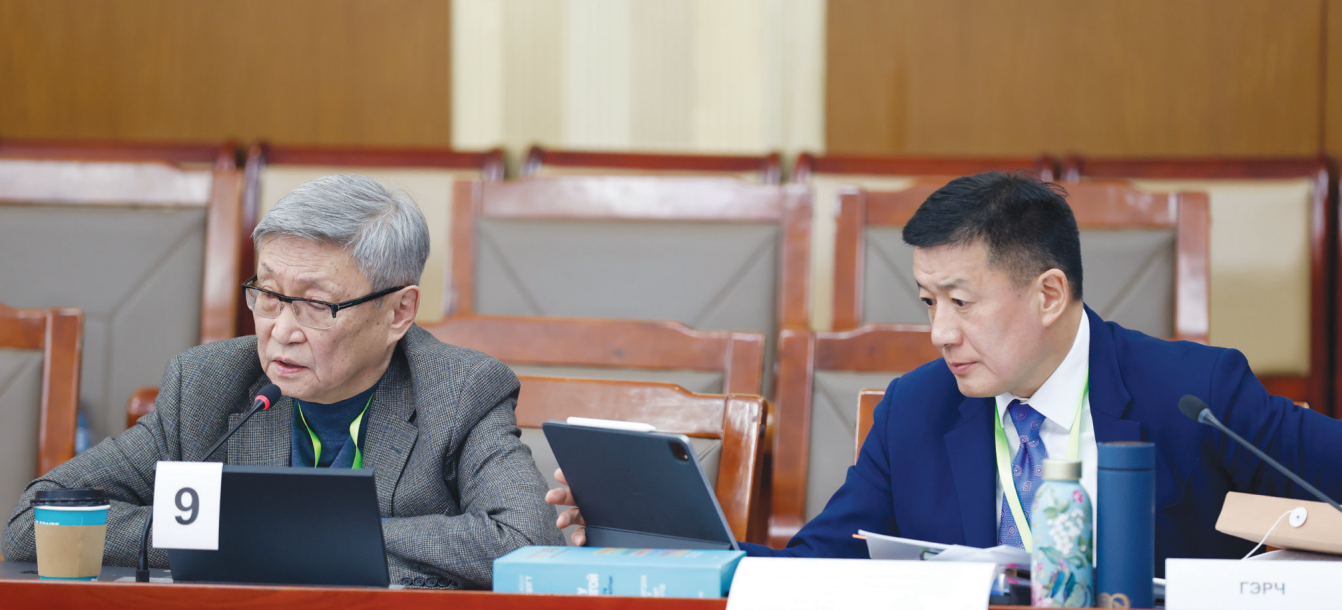
S. BAYAR: THE INVESTMENT AGREEMENT TURNED INTO A LOAN AGREEMENT
The Oyu Tolgoi deposit exploitation agreement was signed on October 6, 2009, during the government of Prime Minister S. Bayar.
Regarding which specific provisions of the Investment Agreement were flawed and what solutions could be implemented during its execution, the 25th Prime Minister, S. Bayar, explained that the main issue concerns the benefits of the Investment Agreement.
According to calculations at the time, the project’s return would be 53–58%, and if the government had not held a 34% stake, the return could have exceeded 70%.
He noted: “As for why the 34% stake was acquired and how the calculations were made without including that share, we need to consider Parliamentary Resolution No. 57, passed on July 16, 2009. As Prime Minister, I was not satisfied with the adoption of Resolution No. 57. The reason is that this resolution did not comply with the Minerals Law in effect at the time, which I had pointed out to the parliamentary leadership and the members who approved it.”
The Minerals Law provides that “the state shall own up to 34% of deposits explored without state budget funding.” However, Resolution No. 57 stipulates that the state shall own no less than 34%. After recovering the initial investment, the state may hold up to 50%, which exceeds the limits set by the law. Once the parliamentary resolution was passed, the government had no choice but to act in accordance with it.
As a result of the decision for the state to acquire a 34% stake, the Investment Agreement effectively became a loan agreement. The government had to take out a loan to finance its 34% share. The main issue now lies with the loan itself and its high interest rate.
Although the two parties involved in the project should have been discussing its benefits, for the past ten years, their focus has been on the loan and its interest. The government continues its negotiations with the investor, the Rio Tinto Group. As long as Mongolia maintains 34% stake, the conversation will remain centered on debt and loans. Even if the interest rate is reduced, it cannot be eliminated.
Bayar further reflected on the mistakes and necessary actions: “What mistakes were made, and what should be done next? One of the main mistakes in the Investment Agreement was the decision to grant the state a 34% stake. Additionally, the failure to clearly specify the benefits the project would bring, in the law and the agreement, was a mistake on the part of our government and me as Prime Minister.”
The agreement contains general provisions on taxes and dividends, but because these were not legally formalized, the parties have had different interpretations and explanations. At the time, there was no legal framework for acquiring the 34% stake through a special mineral royalty. Had such a framework been in place, the benefits would have been greater.
S. BAYARTSOGT: THE SHAREHOLDERS’ AGREEMENT CAN BE AMENDED; SUCCESSIVE GOVERNMENTS HAVE DONE INSUFFICIENT WORK
Former Finance Minister S. Bayartsogt stated that the legal framework must be improved. Successive governments have failed to ensure proper implementation and enforcement of the Investment Agreement. Loan interest rates and management fees are excessively high. The feasibility study indicated that 53% of the project’s benefits would go to the Mongolian side, and this should have been explicitly reflected and guaranteed in other contractual documents.
Since the project will last for 70 years, if it is financed through loans, we should be able to discuss the interest rate after a certain period. Although provisions were made to update the feasibility study every five years and to renegotiate and agree on loan interest rates every seven years, the government in office at the time failed to implement these measures in 2018. In addition to discussing this openly with the public, there are also internal matters that need to be addressed.
Bayartsogt emphasized: “I personally believe that the Investment Agreement itself is very good. However, its implementation has been poorly executed. If we hold negotiations with the investors every seven years to reduce the loan interest, it would be possible to bring the interest rate down to a reasonable level. I am not the only one discussing this. In 2019, Parliament adopted Resolution No. 97, which contained two provisions: that the Investment and Shareholders’ Agreements be improved, and that issues related to the Dubai Agreement be brought into compliance with the law. It was agreed to include in the Shareholders’ Agreement a provision that 53% of the project’s benefits would go to Mongolia and 47% to the investors, but the 2021 government failed to implement this.”
He added that the Shareholders’ Agreement includes provisions on the project’s major costs, loan interest, and tax incentives, and that the possibility of amending this agreement is always open. Both parties can negotiate and sign amendments, and if the investor is gaining profit through lending, it is possible to identify any errors or shortcomings and negotiate accordingly. Successive governments have not done their work adequately.
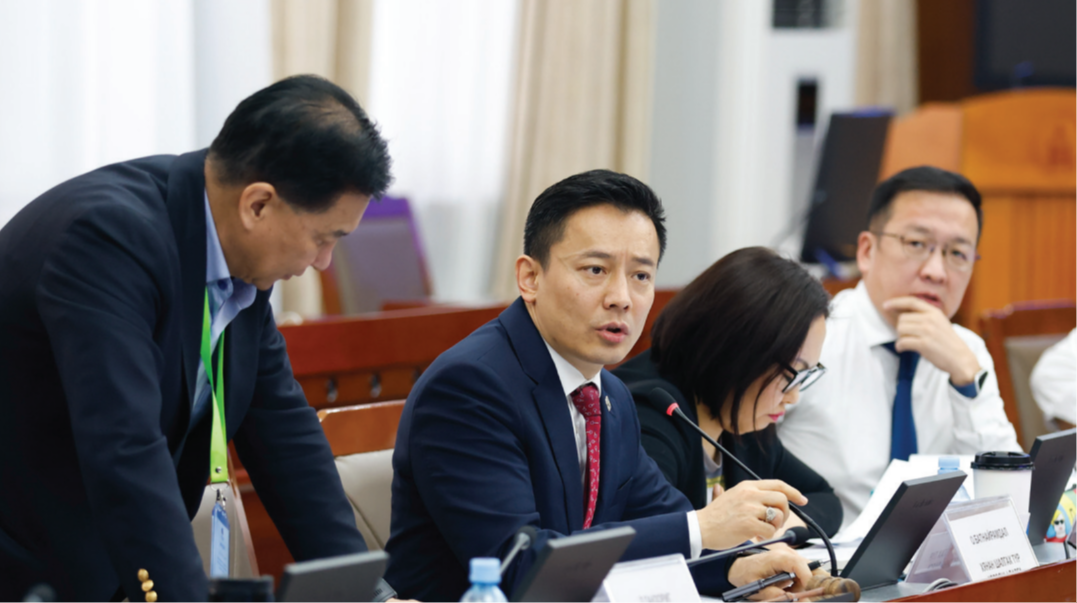
THE PROJECT HAS RECEIVED $11.6 BILLION IN LOAN FINANCING
O. Batnairamdal, chairman of the Interim Oversight Committee, stated that the underground construction work of the Oyu Tolgoi project is expected to be completed this year, marking a major transition. After 16 years of construction, the project is set to become a stable mining operation and a major producer. In just 2–3 years, Oyu Tolgoi is projected to become the world’s third-largest copper producer. Therefore, he emphasized that the parties must uphold the originally agreed 53% share of the project’s benefits.
Regarding investment in the Oyu Tolgoi project, S. Munkhsukh, CEO of Oyu Tolgoi LLC, stated that the Rio Tinto Group has invested $32 billion in the project between 2010 and 2024, and that this investment has already been absorbed into Mongolia’s economy. The investment came from three sources. Oyu Tolgoi began production in 2013, and revenue started flowing in. Between 2013 and 2024, sales revenue amounted to $16.4 billion, which was used to cover the project’s operational costs and construction. He also noted that the project received $11.6 billion in loan financing.
Mentioning the Oyu Tolgoi project’s goal of becoming the world’s third-largest copper producer by 2030, the chairman of the Interim Oversight Committee noted, “Since 2006, the Rio Tinto Group has initiated this construction in Mongolia, and we should be grateful for that. In the coming decades, we will continue to partner and move forward together. On the other hand, now that more than half of the 30-year Investment Agreement—16 years—has passed, it is time to evaluate the agreement, its implementation, and its consequences, and to make decisions.” He emphasized at the close of the three-day hearing that, as a result of the Interim Committee’s work, he hopes the Oyu Tolgoi project will enter a new era of mutually beneficial cooperation based on trust.
Since July 2, 2025, the Interim Oversight Committee has worked for over five months, with 18 auditors reviewing evidence, conducting assessments and analyses, and presenting the results of the open hearings to Parliament.
At its plenary session on Friday, December 26, Parliament approved a resolution on the measures to be taken and implemented following the special audit and open hearings, aimed at ensuring Mongolia’s interests in the exploitation of the Oyu Tolgoi deposit and increasing the benefits received.
The passage of the parliamentary resolution, at a time when the government has already begun negotiations with the investor, the Rio Tinto Group, provides clear guidance for the direction of these discussions.
The resolution instructs the government to include a clear provision in the agreement during negotiations with the investor, stating that Mongolia’s share of the benefits must be no less than 53%. P. Ganzorig, Member of the Interim Oversight Committee and Member of Parliament, stated that the resolution also calls for evaluating the implementation of the Shareholders’ Agreement, assessing the opportunities Mongolia may have lost during the past period, and taking appropriate measures.