Эрдсийг эрдэнэст
Ирээдүйг өндөр хөгжилд
Ирээдүйг өндөр хөгжилд
Mining The Resources
Minding the future
Minding the future
In the February 2026 issue of The Mongolian Mining Journal:
By B.Tugsbilegt
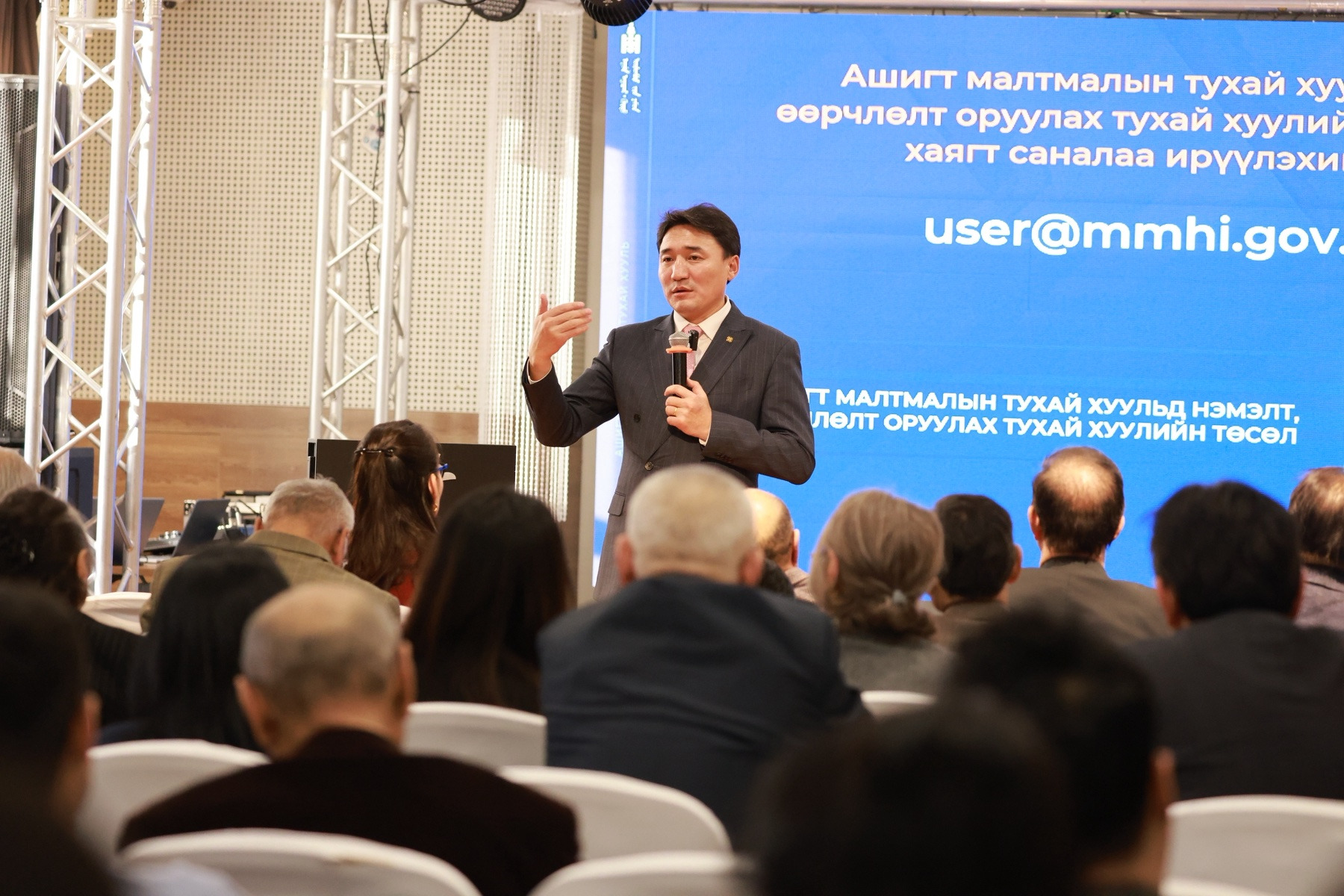
February was, in many respects, devoted to discussions surrounding amendments to sector-specific legislation. The preliminary public consultation on the proposed amendments took place on February 6 and continued in stages across several provinces.
The Ministry of Industry and Mineral Resources presented its draft amendments to the Law on Minerals and, within a relatively short period, organized a series of public hearings.
During these hearings, industry stakeholders put forward a number of significant proposals. Although the discussions were extensive and, at times, vigorous, it became clear that the sector is eagerly awaiting the adoption of the revised legislation.
The Ministry of Industry and Mineral Resources of Mongolia intends to submit the draft amendments to Parliament in mid-March for consideration. At present, the remaining steps involve consolidating feedback from the public consultations and finalizing the law’s impact assessment.
The bill is designed to maintain — and potentially expand — the mineral resources sector's momentum as the leading force behind Mongolia's economic growth.
While mineral exports continue to grow, several key factors underpinning the sector's operational stability are showing gradual signs of strain. According to a study by Ernst & Young, if current trends persist, investment in Mongolia's mining sector could fall to its lowest level by 2050.
At the same time, the steady decline in the issuance of exploration licenses is increasingly constraining opportunities to discover new deposits. With the construction phase of Oyu Tolgoi nearing completion and investment growth likewise slowing, economists have repeatedly warned that the time has come to prepare for the next wave of major projects.
However, amid the current surge in mining exports, these underlying concerns may not appear particularly urgent to the broader public.
Another significant development involves proposed changes to Mineral Resource Royalty (MRR). The new draft law includes a provision to allocate a larger share of the mineral royalty to the aimag and soum where extraction takes place, reflecting an effort to ensure that local communities benefit more directly from the exploitation of their natural resources.
Although this concept is not entirely new, it represents a policy that has yet to be fully implemented in practice. At the same time, the draft law proposes easing the progressive copper royalties, which have completely limited the development of new projects in the copper sector—one of the country's principal export industries.
Furthermore, the draft law addresses a wide range of issues, which naturally raises questions about whether it will successfully clear the parliamentary "threshold" for consideration. The Ministry stresses that only once the law is debated and enacted will it secure the sustainable development of the sector—an outcome that, in turn, will support the country's long-term economic growth.

G. Namchinsuren, Director of the Mining Policy Department at the Ministry of Industry and Mineral Resources of Mongolia, presented the draft law during the preliminary public consultation. According to him, the Law on Minerals was first enacted in 1997 and fully revised on July 8, 2006, with 11 chapters and 66 articles. Since then, the law has been amended 16 times, affecting various provisions across 11 chapters and 59 articles.
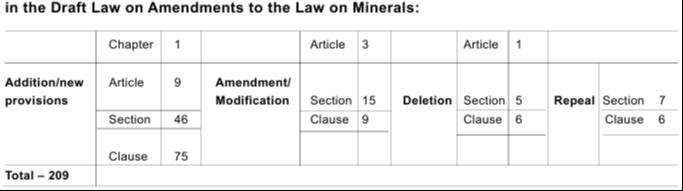
The amendments have been extensive: 61 changes in 2009, 15 in 2010, 8 in 2011, 28 in 2012, 6 in 2013, 79 in 2014, 26 in 2015, 16 in 2016, 26 in 2017, 3 in 2018, 30 in 2019, 2 in 2021, and 10 in 2022—totaling more than 400 changes. The new draft law proposes revisions to 209 articles and provisions of the existing law.
Regarding the scope of the law, the draft amendments to the sectoral legislation will address the following issues:
Scope of the New Draft Law
Issuance of exploration licenses upon application
Legal framework for strategic (important) minerals
Special licenses and operations of processing (concentrator) plants
Local benefits derived from the MRR
Accompanying Draft Laws to Repeal, or Amend Legislation:
Draft law to repeal the Law on Common Minerals
Draft law on regulations for implementing the Law on Minerals
Draft law to amend the Law on the Mining Products Exchange
Draft law to amend the Law on Budget
Draft law to amend the Law on National Sovereign Wealth Fund
Draft law to amend the Law on Future Heritage Fund
Draft law to amend the regulations for implementing the Law on Future Heritage Fund
Draft law to amend the Law on Nuclear Energy
Draft law to amend the Law on Permits
Draft law to amend the Law on Stamp Duties
Draft law to amend the Law on Specially Protected Areas
Draft law to amend the "Law with the long name"
Draft law to amend the Law on Land
Draft law to amend the Law on Violations
Draft law to amend the Law on Inspection and Resolution of Violations
The current Law on Minerals in force contains more than 620 provisions. Since 2006, over 410 of these have been amended. The newly submitted draft proposes changes to a total of 209 sections.
Under the Law on Legislation, this means the draft affects less than half of the provisions of the current law. By comparison, a full revision of the law is considered to involve amendments to more than 80% of its provisions.

The discussion was also attended by G. Damdinnyam, Minister of Industry and Mineral Resources, who provided detailed explanations. On this occasion, the ministry opted for a draft of amendments rather than a full revision, aiming to save time while preserving the strength of the existing legal framework.
During the discussion, the minister made it clear that he is fully committed to developing and enacting the new law. He stressed that the draft is designed to promote responsible mining while ensuring the country’s long-term economic growth.
The minister also noted that most current mining operations are based on deposits discovered before the 1990s. To secure a sustainable and prosperous future for coming generations, he said, it is essential to intensify geological exploration and support responsible mining practices. Conversely, any irresponsible mining will be strictly halted.
He emphasized that, because the country’s long-term economic growth continues to rely on the mining sector, maintaining stable investment and establishing a robust legal framework remain urgent priorities.
Regarding the first key aspect of the new law—the issuance of exploration licenses—G. Namchinsuren, Director of the Mining Policy Department at the Ministry of Industry and Mineral Resources, noted that license issuance peaked in 2004, 2005, and 2008, but no licenses were granted at all between 2011 and 2013.
Since 2019, licenses have been awarded mainly through a competitive selection process, which so far has not delivered the desired results. In other words, this approach is considered insufficient for safeguarding the country’s economic security and for discovering and bringing new deposits into commercial use.
Under the new draft law, exploration licenses will initially be issued upon application, while still retaining the principle of awarding licenses through competitive selection. Currently, geological baseline surveys are conducted using state budget funds. If these surveys identify a promising area, it is officially designated as a competitive selection zone, and an exploration license is then awarded through the competitive process.
Conversely, areas that are surveyed but not identified as prospective remain available. In such cases, if an interested party applies, a license can be granted upon application. Similarly, if a particular area attracts insufficient participants for a competitive selection, the draft law allows a license to be issued upon application. In all instances, the draft law requires that the area is first approved by the government and publicly announced.
A major part of the draft law's primary objective concerns critical minerals. Around the world, countries are defining policies for critical minerals—raw materials essential for advanced technologies—and focusing on projects for their exploration, extraction, beneficiation, and processing. The Ministry believes that it is now time for Mongolia to establish an official list of its critical minerals and develop a policy aligned with global trends.
More than twenty countries have already expressed interest in cooperating with Mongolia in the field of critical minerals. However, the country has so far lacked a clear policy in this area. Director G. Namchinsuren emphasized that it is essential to officially approve a list of critical minerals as the first step toward a strategic national policy.
To support activities in this sector, the draft law specifies that critical minerals will be exempt from the provisions of the existing "Long-Name Law".
If a mining license holder conducts beneficiation (processing) operations themselves, a separate beneficiation license will not be required. However, plants that do not hold a mining license and process raw materials sourced from elsewhere will still need a beneficiation license.
Special licenses for secondary deposits will no longer exist; instead, activities related to secondary deposits will now fall under the scope of the beneficiation license.
According to data from the General Department of Customs, mineral processing plants were operating at high capacity prior to 2019. However, as a result of MRR differential payments, output from these plants declined sharply. In 2025, the situation appears to be recovering, largely driven by rising raw material prices.
Currently, 96 enterprises are exporting processed products without a mining license. Of these, 21 submit mining work plans and reports to the Mineral Resource and Petroleum Authority for approval, while no specific information is available for the remaining 75 enterprises. The draft law includes amendments to the licensing provisions to ensure that all these enterprises are properly registered.
The draft law also introduces a provision to prevent double charging of the MRR. At present, when beneficiation or processing plants pay MRR on domestic sales and then export the processed products, the royalty is often applied again at a higher rate on the export value. Under the new law, MRR will be paid only once, eliminating duplication and improving the operational capacity of processing plants.
The redistribution of Mineral Resource Royalty (MRR) is one of the key changes in the new draft law. All 21 aimags and 330 soums in Mongolia receive a share of the revenues collected from the sector, primarily through the Local Development Fund, which is entirely financed by mining revenues.
For example, under the current law, 10% of MRR forms the core of the fund’s revenue. In addition, the fund receives all revenues from exploration licenses, half of the revenues from mining licenses, and 30% of royalties from oil resource exploitation. In the 2026 budget, a total of 441 billion MNT is planned to be allocated to this fund.
Mineral Resource Royalty (MRR)
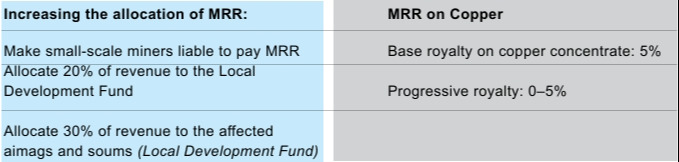
The Ministry has reached a preliminary agreement with the Ministry of Finance to increase the share of MRR allocated to the Local Development Fund from 10% to 20%. Currently, any aimag or soum contributing more than 20% of MRR receives 10% of the revenue generated from that contribution. Under the new draft law, such soums would receive 30% of total MRR revenue directly, a move designed to make the benefits of mining more generous and tangible at the local level.
This approach is expected to provide implementing soums with greater resources to address pressing local development issues. The Ministry hopes that it will also help local authorities better understand and support mining activities, fostering a stronger connection between communities and the sector.
In addition, the draft law introduces a progressive MRR on copper, with a base rate of 5% and an additional 0–5% applied depending on price increases. Currently, Erdenet Mining Corporation pays 21.5% in MRR. If the new law is enacted, the legal rate would be capped at 10%, creating a potential risk for the Ministry of Finance by reducing a major source of budget revenue. For example, in 2025 alone, Erdenet Mining Corporation paid approximately 1.1 trillion MNT in MRR.
To address this, the draft law includes a three-year "transition window" during which Erdenet Mining Corporation's MRR will be frozen at current levels, ensuring state budget revenues remain stable in the medium term. While the MRR paid by the company will decrease after the transition, as a state-owned enterprise its dividends will increase, meaning the share of profits reaching the public will not decline, the Ministry explained. Meanwhile, other private companies will gain the opportunity to launch copper projects, potentially boosting investment and future MRR revenue.
The draft law also stipulates that no MRR will be levied on by-product elements contained in concentrates if doing so is economically unfeasible. Currently, of the 21.5% MRR paid by Erdenet Mining Corporation, 1.5% is attributable to by-product elements. The draft law provides that Parliament will separately approve the lists of by-product elements and critical minerals that are subject to MRR.
In addition, the draft law sets the reference price for calculating MRR based on the Mongolian Stock Exchange, preventing companies from paying royalties at excessively high benchmark prices.
Explanations of Amendments to Other Laws Accompanying the Draft Law:
| Repeal of the Law on Common Minerals |
The draft law provides that matters related to common minerals will be regulated through implementing regulations under the Law on Minerals. Existing licenses will be registered and regulated in accordance with the provisions of the Law on Minerals. |
| Amendments to the Law on Mining Products Exchange |
The draft law proposes the following amendments to the Law on Mining Products Exchange. Specifically, the law defines “exchange transactions” as “those conducted for export.” Because these transactions are legally required to be priced based on border points in neighboring countries, the issue of supplying raw materials to the domestic market has largely been overlooked. The draft law addresses this gap by allowing raw materials to be sold domestically through the exchange, while also introducing greater flexibility in delivery terms.In line with Parliamentary Resolution No. 124 of 2025, the government has also been directed to separate transportation arrangements from exchange transactions. This change is expected to give both sellers and buyers the option to manage transport independently. |
| Amendments to the Law on National Sovereign Wealth Fund |
Amendments are planned to the Law on National Sovereign Wealth Fund. Specifically, “Chinggis Khan SWF” LLC has been established under Erdenes Mongol group to manage the fund, which consists of three sub-funds: the Future Heritage Fund, the Savings Fund, and the Development Fund. Currently, the Development Fund is legally financed only from half of any budget surplus—a source that rarely materializes. Under the new draft law, the Ministry of Industry and Mineral Resources will allocate a portion of the 65% of MRR revenue directed to the Future Heritage Fund to the Development Fund. This will allow Parliament and the government to finance prioritized development projects. At the same time, the legal provision for contributing from actual budget surpluses remains in place, effectively giving the Development Fund two sources of revenue. |
| Amendments to the Law on Nuclear Energy |
To avoid confusion between rare earth elements and uranium or thorium, the terminology has been revised. It is now specified that rare earth elements will be regulated under the Law on Minerals rather than the Law on Nuclear Energy. |
| Amendments to the Law on Specially Protected Areas |
In previous years, basic geological surveys were conducted in state-designated protected areas. However, the 2023 Budget Law and its accompanying legislation prohibited such surveys within these areas. The proposed amendment seeks to restore the right to conduct purely scientific geological surveys, which are considered critically important for safeguarding national interests. |
| Amendments to the Law on Land |
Under the current Law on Minerals, exploration and extraction of minerals are not allowed on lands reserved for local special purposes. However, there were cases in the past where the land was quickly reclassified for local special use as soon as mineralizations are discovered. The new amendment clarifies that these decisions will no longer be left to local authorities; instead, the central government will make the final determination. |
The process of introducing and passing the draft law is unlikely to be as straightforward as approving the state budget with Parliament’s routine endorsement. Whether the proposed amendments to the Law on Minerals will ultimately be adopted remains uncertain. It is clear that there will be intense debates during the session.
Nonetheless, the Ministry has taken a notably more assertive approach. Through the draft law, it aims to promote the sector's sustainable development — an effort that has garnered support from industry professionals.