Эдийн засаг
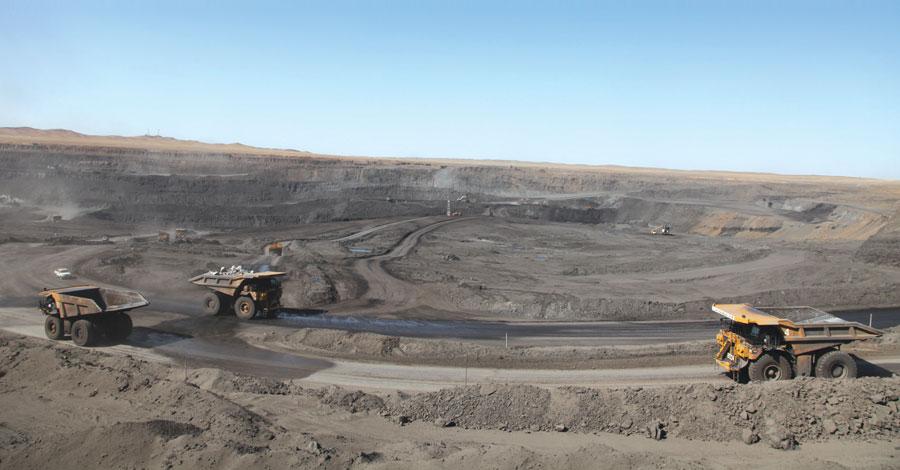
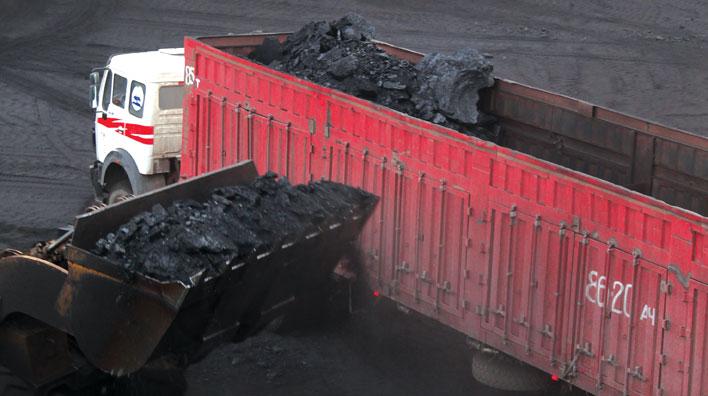
Нүүрсний экспорт он гарсаар 40 орчим хувиар өсөж 86.2 сая тоннд хүрэв
Манай улсын гадаад худалдааны үзүүлэлт энэ оны эхний 9 сарын дүнгээр нийт бараа эргэлт 25.9 тэрбум ам.доллар болж өмнөх оны мөн үеэс 6.7 орчим тэрбум ам.доллар буюу 34.7%-иар өссөн тухай Гаалийн ерөнхий газар мэдээллээ. Энэ дундаа экспортын хэмжээ улсын хэмжээнд 16.2 тэрбум ам.долларт хүрсэн нь өмнөх оны мөн үетэй харьцуулахад 51.3%-иар өссөн байна. Импортын хэмжээ 9.72 тэрбум ам.долларт хүрсэн нь өмнөх оны мөн үеэс 1.19 тэрбум ам.доллар буюу 14%-иар өссөн байна.
Монгол Улсын эдийн засаг оны эхний хагас жилд 7.7% өсөв
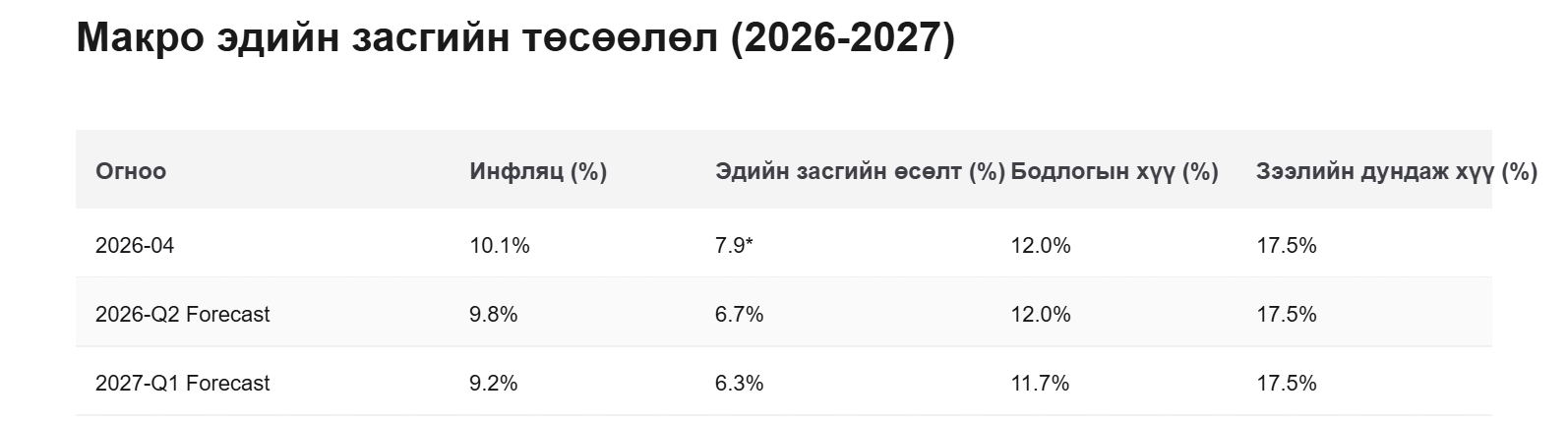
Үндэсний статистикийн хороо энэ оны эхний хагас жилийн байдлаар манай улсын эдийн засаг өмнөх оны мөн үетэй харьцуулахад 7.7%-иар өссөн болохыг (2026.08.18) мэдээллээ. Тодруулбал, дотоодын нийт бүтээгдэхүүн (ДНБ)-ий хэмжээ оны үнээр тооцвол, 2026 оны эхний хагас жилд 52.5 их наяд төгрөг болж, өмнөх оны мөн үеэс 12.2 (30.4%) их наяд төгрөгөөр өсөхөд уул уурхай, олборлолтын салбарын нэмэгдэл өртөг 7.0 (68.4%) их наяд төгрөг, үйлчилгээний салбарын нэмэгдэл өртөг 3.1 (17.6%) их наяд төгрөгөөр тус тус өссөн нь нөлөөлсөн байна.
Төв банк бодлогын хүүг 0.5%-иар өсгөж 12.5%-д хүргэв
Монголбанкны Мөнгөний бодлогын хороо 2026 оны 8 дугаар сарын 12-ны өдрийн ээлжит бус хурлаараа инфляц, эдийн засаг, банк, санхүүгийн зах зээлийн өнөөгийн байдал, дотоод, гадаад орчны төлөв болон эрсдэлийг харгалзан үзээд дараах шийдвэрийг гаргалаа.
Зэсийн баяжмалын экспортын орлого он гарсаар 5.46 тэрбум ам.долларт хүрч 90% өсөв
Манай улсын гадаад худалдааны нийт бараа эргэлт энэ оны эхний 7 сарын байдлаар 19.36 тэрбум ам.долларт хүрсэн нь өмнөх оны мөн үеийнхээс 5.13 тэрбум ам.доллар буюу 36.1%-иар өссөн тухай Гаалийн ерөнхий газар мэдээллээ. Энэ дундаа экспорт 12.2 тэрбум ам.доллартой тэнцэж 57.5%-иар, импортын дүн 7.16 тэрбум ам.долларт хүрч, 10.5%-иар тус тус нэмэгджээ. Ингэснээр гадаад худалдааны тэнцэл 5.05 тэрбум ам.долларын ашигтай гарчээ.
Төв банк он гарсаар 8.9 тонн үнэт металл худалдан авлаа
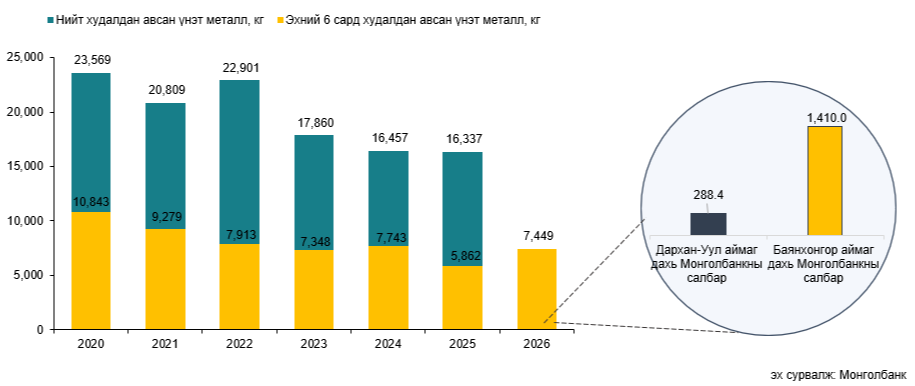
Монголбанк 2026 оны 7 дугаар сард 1,439.2 кг, оны эхнээс өссөн дүнгээр нийт 8.9 тонн үнэт металл, үүнээс Дархан-Уул аймаг дахь Монголбанкны салбар 431.8 кг, Баянхонгор аймаг дахь Монголбанкны салбар 1,677.1 кг үнэт металл худалдан авсан байна. Энэ нь өмнөх оны мөн үетэй харьцуулбал 26.1%-иар өссөн үзүүлэлт байна.
Төсвийн алдагдал 2.14 их наяд төгрөгт хүрч, өмнөх оны мөн үеэс 2.8 дахин өсөв
Улсын нэгдсэн төсвийн нийт орлого, тусламжийн хэмжээ 2026 оны эхний хагас жилийн урьдчилсан гүйцэтгэлээр 16.8 их наяд төгрөгт хүрч, өмнөх оны мөн үеэс 2.8 (20.1%) их наяд төгрөгөөр, тэнцвэржүүлсэн орлого тусламжийн хэмжээ 14.6 их наяд төгрөгт хүрч, 1.4 (10.7%) их наяд төгрөгөөр тус тус өсжээ. Нийт зарлага, эргэж төлөгдөх цэвэр зээлийн хэмжээ 2026 оны эхний хагас жилд 16.8 их наяд төгрөг болж, тэнцвэржүүлсэн тэнцэл 2.14 их наяд төгрөгийн алдагдалтай гарлаа. Төсвийн алдагдал өмнөх оны мөн үед 758 тэрбум төгрөг байсантай харьцуулахад ийнхүү 2.8 дахин өсөөд байна.
Нүүрсний экспорт оны эхний хагаст 59.2 сая тоннд хүрч 60 орчим хувиар өсөв
Манай улсын гадаад худалдааны үзүүлэлт 2026 оны эхний хагас жилийн байдлаар нийт бараа эргэлт 16.5 тэрбум ам.долларт хүрч өмнөх оны мөн үеийнхээс 4.4 тэрбум ам.доллар буюу 36.3%-иар өссөн тухай Гаалийн ерөнхий газар мэдээллээ. Энэ дотроо экспорт 10.39 тэрбум ам.доллартой тэнцэж өмнөх оны мөн үеийнхээс 57.9% нэмэгджээ. Импортын тухайд 6.12 тэрбум ам.долларт хүрч өмнөх оны мөн үеийнхээс 10.6% дээшилжээ. Ийнхүү оны эхний хагас жилийн байдлаар гадаад худалдааны тэнцэл 4.28 тэрбум ам.долларын ашигтай гарлаа.
ҮСХ: Эдийн засгийн өсөлт оны эхний улиралд 7.9%-тай гарлаа
Үндэсний статистикийн хороо энэ оны эхний дөрвөн сарын байдлаарх нийгэм, эдийн засгийн тайланг танилцууллаа. Уг тайланд дурдсанаар манай улсын дотоодын нийт бүтээгдэхүүний өсөлт энэ оны эхний улиралд (2015 оны зэрэгцүүлэх үнээр тооцвол) 7.9%-д хүрсэн байна.
Нүүрсний экспорт он гарсаар 39 сая тоннд хүрч 56.5% өсөв
Манай улсын гадаад худалдааны нийт бараа эргэлт энэ оны эхний дөрвөн сарын байдлаар 10 тэрбум 481.6 сая ам.долларт хүрч өмнөх оны мөн үеийнхээс 34.3%-иар өссөн тухай Гаалийн ерөнхий газар мэдээллээ. Энэ дундаа экспорт 6.81 тэрбум ам.доллар, импорт 3.67 тэрбум ам.долларыг тус тус эзэлжээ. Экспортын дүн өмнөх оны мөн үеийнхээс 60.6%-иар, импортын дүн 3.1%-иар тус тус нэмэгджээ. Ингэснээр гадаад худалдааны тэнцэл 3.14 тэрбум ам.долларын ашигтай гарлаа.
Төв банк он гарсаар 4.3 тонн үнэт металл худалдан авлаа
Монголбанк 2026 оны 4 дүгээр сард 1,057.7 кг, оны эхнээс өссөн дүнгээр нийт 4.3 тонн үнэт металл, үүнээс Дархан-Уул аймаг дахь Монголбанкны салбар 124.2 кг, Баянхонгор аймаг дахь Монголбанкны салбар 1,020.3 кг үнэт металл худалдан авсан байна. Энэ нь өмнөх оны мөн үетэй харьцуулбал 30.7%-иар өссөн үзүүлэлт юм.
Банкны заавал байлгах нөөц тооцох эх үүсвэрт өөрчлөлт оруулахаар шийдвэрлэв
Мөнгөний бодлогын хороо хуралдаж гадаад эх үүсвэрийн бүтцийг илүү урт хугацаатай, тогтвортой чиглэлд шилжүүлэх, валютын болон хугацааны зөрүүг бууруулах зорилгоор дээрх эх үүсвэрийг гадаад валютын заавал байлгах нөөцийн шаардлагад хэсэгчлэн, үе шаттайгаар хамруулах шийдвэр гаргалаа. Энэ нь богино, дунд хугацаатай гадаад санхүүжилтийн сэдлийг бууруулж, урт хугацаат эх үүсвэрийг дэмжихэд чиглэсэн бодлогын арга хэмжээ юм.
ҮСХ: Төсвийн тэнцвэржүүлсэн орлого оны эхний улиралд 2.5% өсөв
Улсын нэгдсэн төсвийн нийт орлого, тусламжийн хэмжээ 2026 оны эхний улирлын урьдчилсан гүйцэтгэлээр 7.2 их наяд төгрөгт хүрч, өмнөх оны мөн үеэс 764.7 (11.9%) тэрбум төгрөгөөр өсөж, тэнцвэржүүлсэн орлого тусламжийн хэмжээ 6.3 их наяд төгрөг болж, өмнөх оны мөн үеэс 153.1 (2.5%) тэрбум төгрөгөөр тус тус өссөн тухай Үндэсний статистикийн хороо мэдээллээ.